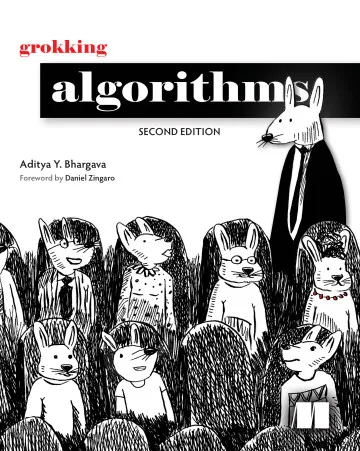
Grokking Algorithms
Notes and visual takeaways from Grokking Algorithms, 2nd edition, by Aditya Y Bhargava. Covers search, sort, graphs, trees, dynamic programming, and more.
Articles and notes about backend engineering, software design and the tools behind them.
Notes and visual takeaways from Grokking Algorithms, 2nd edition, by Aditya Y Bhargava. Covers search, sort, graphs, trees, dynamic programming, and more.
A shared contract that grows to serve everyone ends up serving no one well. Learn how ISP keeps each interface honest about what its client actually needs.
When business logic knows which database it's talking to, the database owns the business logic. Learn how DIP breaks that grip by making policy depend on what it needs, not on how it's delivered.
A subtype that can't fully honor its parent's contract doesn't announce itself — it waits. Learn how LSP ensures the contract you depend on is the contract you actually get.
Code that has to be opened every time requirements change is code you will eventually break. Learn how OCP lets new behavior arrive as new files, not as edits to existing ones.
I use Ghostty with herdr on Mac, and Windows Terminal with herdr on Windows, both natively and through WSL.
How to replicate the click-to-zoom outliner interaction from Roam, RemNote, and Logseq in Obsidian, with two plugins and a CSS snippet for styled bullets.
How I configured Obsidian as a developer's personal thinking studio — vault structure, web clipper, key plugins, and the PKM ideas behind each decision.
Fedora could not see the Yoga 7 14ILL10 accelerometer. Installing Lenovo's model-specific ISH firmware brought it back.
A hot path is code that runs on every request — small inefficiencies there compound into P99 spikes users actually feel. How to find hot paths with profilers and fix them in .NET.
Average response time hides the worst user experiences. P99 can run 100× slower than P50 on the same dataset. What P50, P95, and P99 mean, why they matter, and how to read them together.